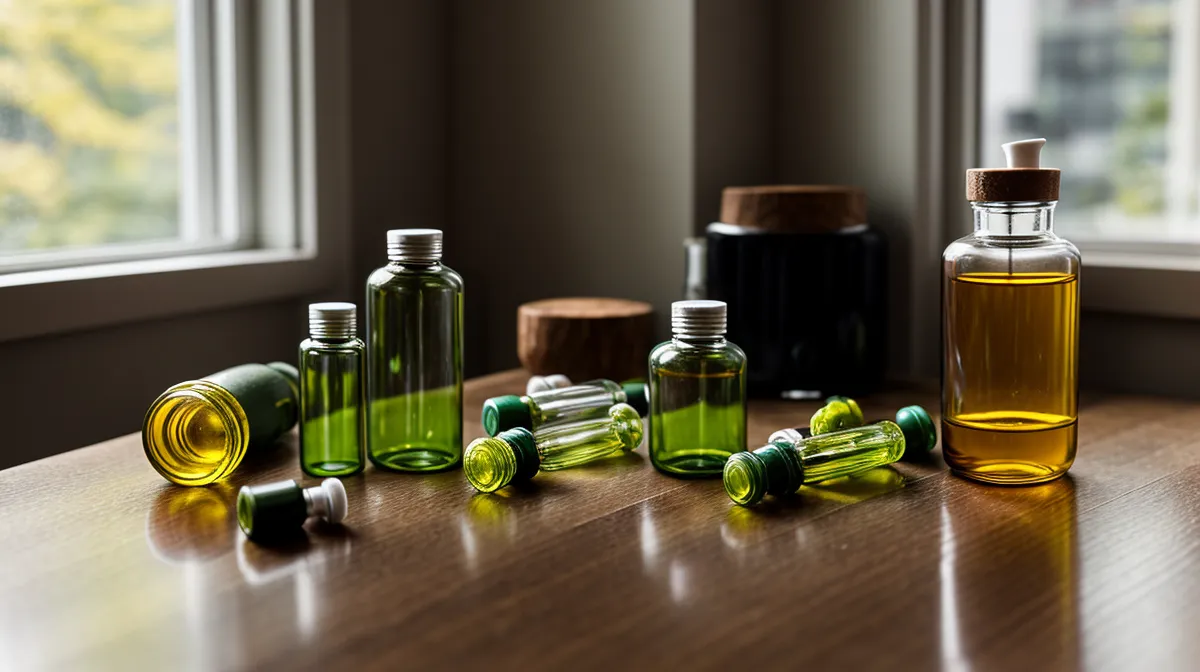
Four bottles sat on a shelf at Zupan's Markets on West Burnside, and only one of them would actually tell me what was inside. That's supplement transparency in one snapshot - most natural weight loss products lean on ingredient lists that sound impressive and reveal nothing, while the few that don't are usually built around bioflavonoids instead of a jolt of stimulants. Telling them apart from the shelf has basically become my whole personality here in Portland.
Quick housekeeping before anything else: some links below are affiliate links, meaning I earn a commission if you buy through them, at no extra cost to you — and I only recommend things I've actually opened and used myself. None of this is medical advice. I'm not a doctor or a scientist, just someone who's burned through more bottles than I'd like to admit before I started actually comparing what was in them side by side.
Two Labels, Two Philosophies
Reading a supplement label is a lot like reading a recipe card at a potluck. One neighbor hands you a card with exact measurements — two teaspoons of this, half a cup of that. Another just says "seasoning blend, trust me" and expects you to eat it anyway. Most weight loss supplements are the second kind. They lean on proprietary blends, listing a dozen great-sounding ingredients — bitter orange, green coffee bean, whatever's trending — without saying how much of each one actually made it into the capsule.
None of this is a full cost-per-serving breakdown, and I'm not going to pretend it is — that math deserves its own side-by-side comparison, ingredient by ingredient, somewhere else on this site. But the short version is that a vague blend makes the math impossible anyway, because you can't price out what you can't see.
What Proprietary Blends Actually Hide
Here's the part that actually irritates me: manufacturers aren't required to break down how much of each ingredient made it into that blend, only to list them in descending order by weight. So a company can add a small, mostly symbolic amount of an expensive-sounding ingredient and still put it near the top of the label, just so it looks good on the front of the box. It's less an ingredient list and more a marketing decision wearing an ingredient list's clothes.
Learning to read past that trick is basically the whole skill, and it's worth doing before you swallow anything new. The alternative — sourcing one or two ingredients at a real, meaningful dose instead of stacking a dozen at symbolic amounts — is a different bet entirely, and it's the one I've come to trust more the longer I've done this.
Does Cutting Stimulants Actually Change Anything?
A few years back I tried a "thermogenic" fat burner called Metabolic Shred, built on exactly the kind of blend I just described. Within a few days my heart was doing something it had no business doing on an ordinary afternoon, racing for no reason, thudding away while I sat at a stoplight doing nothing more strenuous than waiting for the light to change. I stopped taking it and never touched another proprietary thermogenic blend again.
That wasn't a fluke reaction. Stimulant-driven weight loss products are, functionally, caffeine wearing a disguise. Work nights, or keep an irregular schedule, and they can wreck your circadian rhythm on top of whatever they're doing to your appetite. You might watch the scale move because you're too wired to eat — which isn't the same thing as your body actually changing how it handles fat and sugar.
There's a whole separate category of appetite-support products built specifically to skip stimulants altogether, and that comparison is worth chasing down on its own if a racing heart is a dealbreaker for you. A forum contact of mine, Mitch Adeyemi, is the guy who first walked me through why proprietary blends dodge dosage disclosure in the first place — he reads PubMed abstracts the way most people scroll Reddit, and he's usually right about this stuff.

Bioflavonoids and Fat Burners Are Solving Different Problems
Bioflavonoids — hesperidin and naringin, specifically — come from the pith and peel of citrus fruit, the bitter white part you've probably spit out at some point without knowing it had a name. No honest brand is going to claim they'll melt fat off you overnight, and I'd be skeptical of any that did. What they've done, in my own experience, is show up quietly instead of loudly.
A bathroom scale can sit dead flat for what feels like forever and then move half a pound on some random morning for reasons that have nothing to do with whatever you swallowed that day. That's exactly why I stopped trusting any product that promises a dramatic before-and-after on a fixed schedule. Compare that to the fat-burner aisle, where the entire pitch is a jolt - you're supposed to feel something within the hour or you want your money back. The more honest comparison for bioflavonoids isn't a shot of espresso; it's closer to swapping fast food for actually cooking at home. Nothing dramatic happens on day one, and that's sort of the point.
None of this touches the gut side of the equation, either. There's a separate, legitimate argument that your microbiome matters more than any single ingredient you're taking, and I'd rather point you toward that discussion than pretend I've settled it here. Fiber-based appetite control is another lane entirely — working through simple physical fullness rather than through any specific compound — and it deserves its own comparison rather than a footnote in this one.
Where CitrusBurn, LeanBiome, and the Rest Actually Fit
CitrusBurn is the product that got me thinking about this whole comparison in the first place. What stood out wasn't the marketing copy — it was that they actually broke down their polyphenol content instead of hiding behind a blend name, the same transparency principle that comes up when you look at how diverse gut bacteria gets discussed in weight loss circles. Transparency is the pattern I'm actually shopping for, not any one ingredient. If gut health is more your angle than citrus, LeanBiome takes the microbiome route instead, and its label is upfront about strain counts in a way most probiotic products aren't.
Whether those strains actually survive long enough in the bottle to matter — the CFU viability question — deserves its own deep dive, and I'd rather answer that properly elsewhere than gloss over it here. Traditional markets across Southeast Asia get this kind of transparency right in ways the US supplement aisle usually doesn't, ingredients sold by weight with nothing hidden behind a brand name, and that habit has shaped how I shop for this stuff more than any single product has.
A guy named Sumit Bhattacharya, who I know from an online group where people compare notes on this exact question, keeps a timestamped spreadsheet of every supplement he's logged. His notes on CitrusBurn versus LeanBiome lined up with mine almost exactly, which told me I wasn't just imagining the difference between a transparent label and a vague one.
Which One Should You Actually Buy?
So which side of this comparison should you actually land on? If you want to know exactly what you're taking and roughly how much of it, reach for something bioflavonoid-forward and transparent about its dosing — that's the case I keep making for CitrusBurn, and it's the one I keep coming back to myself. If gut health matters more to you than appetite specifically, LeanBiome's microbiome angle is the better fit. If you'd rather rebuild your habits around whole food instead of a capsule at all, the Smoothie Diet skips the label-reading exercise entirely and hands you a structured protocol built on real ingredients instead.
An evening ritual that feels like it's doing something has its place too — Cardio Slim Tea fits that space, though it's worth knowing upfront that a lot of "slimming tea" effects are about reduced bloating rather than actual fat loss, a distinction worth understanding before you decide whether it's working for you.
Whatever you land on, the real test stays simple: can the brand tell you what's in the bottle without flinching? If they can't, put it back on the shelf and grab your keys — Zupan's has plenty of options that will. And obviously, run anything new past your own doctor before you start, because my only real credential here is a cabinet full of bottles I probably shouldn't have bought.
All opinions and observations on this site are my own and are shared purely for informational purposes. They do not constitute professional medical, financial, or legal advice. Please consult the relevant professional before acting on any information presented here.