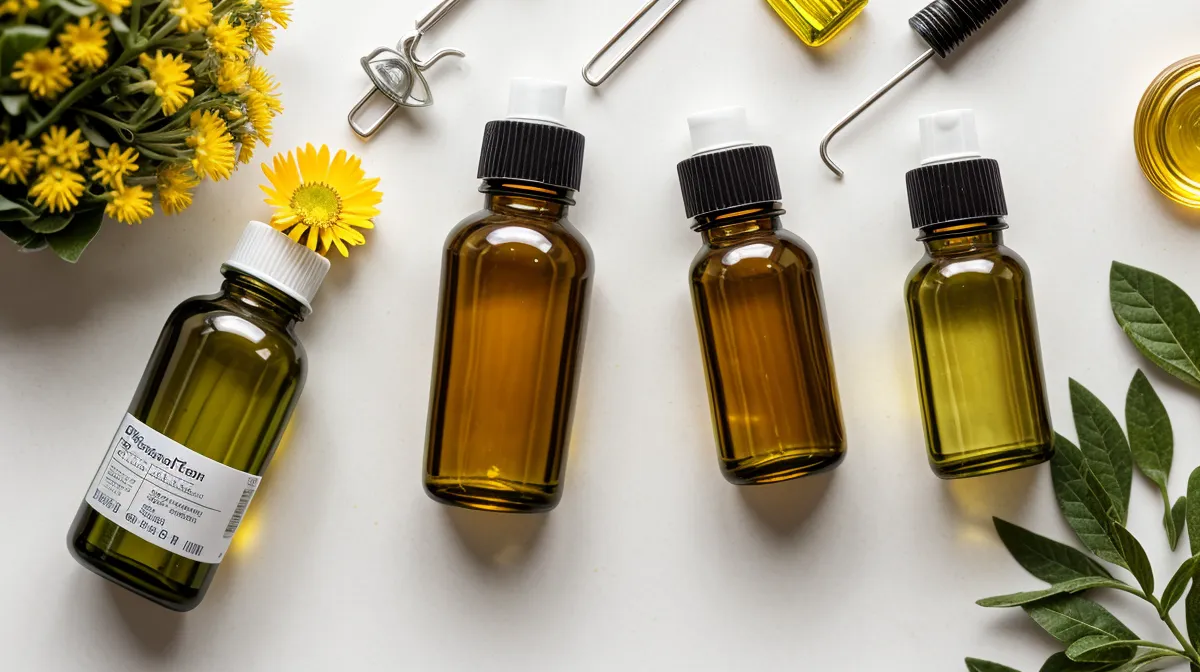
Eleven. That's the number of ingredients I counted standing above the actual active compound on a CLA supplement I bought on impulse after a disappointing checkup, back when I still thought a fancier label meant a better formula — eleven fillers, flow agents, and a trademarked blend name, all listed before the fatty acid I'd actually paid for finally shows up on the panel, in a dose so small it probably wasn't doing much of anything. That bottle is still sitting half-full in a cabinet somewhere, which is a nicer way of saying I got taken for a ride.
Quick disclosure before anything else: some of the links below are affiliate links, meaning I earn a commission if you buy through them, at no extra cost to you. I've bought and used every product mentioned here myself, mostly because I enjoy torturing my own wallet more than I enjoy writing about theory.
Reading Supplement Labels: Softgel or Liquid CLA?
Conjugated linoleic acid — CLA for short — is one of the ingredients that gets buried worst inside a proprietary blend, because shoppers recognize the name and brands bank on that recognition; I get into exactly how that trick works legally in my Label-Reading Obsessive's Guide to Metabolic Support Without the Proprietary Blend Scam, and the short version is enough for now: a blend name can legally hide almost the whole dose from you. I started weighing capsule contents myself after one too many surprises — set a softgel's contents on a kitchen scale once just to check, and the number that clicked into place when the reading settled was noticeably lower than what the bottle's "proprietary complex" claimed. That's also, for what it's worth, a different story from the two years I spent picking through apothecary stalls across Southeast Asia, back when I was traveling rather than reading labels.

Assuming you've found a formula that actually discloses its dose, the next decision is format, and most people get this backwards. A thick amber softgel looks premium, and it does protect polyunsaturated fat from going rancid on a shelf for a long stretch. That part is true. What it doesn't do is get into your system quickly, because your gut has to break down a dense gelatin shell before it even starts emulsifying the oil inside. A liquid or powder version skips that step and absorbs faster, but it trades away shelf stability, and it tends to taste like the inside of a frying pan if you don't keep it cold.
Picture the difference between searing garlic in butter and tossing raw garlic straight into cold stock. The raw version does more, faster, but it's rougher going down and spoils quickly if you leave it sitting out. The cooked version is stable and forgiving but slower to get where it's going. Neither format is wrong here — it comes down to whether your stomach handles pills fine and you'd rather have the shelf life, or you want faster absorption and don't mind the fridge and the rougher taste.
Your Bathroom Scale Is Lying to You
Here's something that trips up almost everyone testing a fat-targeting supplement: the scale and your actual body composition are not the same measurement, and treating them as interchangeable is how people quit on something that's actually working. CLA research is aimed at the ratio of fat to lean mass, not total pounds, which means the number on the scale can sit completely still while your waistband tells a different story entirely. The pooled trial numbers for both, body weight and fat mass, are in my rundown of what each weight-loss ingredient does.
I noticed it the morning I tucked my shirt in without thinking about it and then stood there for a second because I couldn't remember the last time that happened without sucking in first. The scale hadn't moved much in that stretch, if at all, but something underneath clearly had. That's body composition doing its thing quietly while a number on a bathroom floor does nothing worth reporting.
For what it's worth, I'd already tried the opposite extreme — stretches of 16:8 intermittent fasting that plateaued hard partway through, which taught me the scale can stall for reasons that have nothing to do with whether a supplement or a routine is actually working. That's part of why I stopped trusting it as the only measurement that counts.
Targeted CLA or Open-Label Metabolic Support?
Once you've sorted format and stopped obsessing over the scale, you're left with a real decision: do you want an isolated fatty acid dosed at a level that matches the research behind it, or do you want a broader metabolic-support formula that skips the isomer math entirely and just hands you the full label? For anyone trying to approach natural weight loss without leaning on stimulants, that question matters more than which bottle has the prettier font. I ended up leaning toward the second option after enough disappointing softgels, which is how CitrusBurn became the bottle I keep restocking.

My neighbor Leon got curious after noticing how many supplement bottles I'd gone through, and when I handed him the CitrusBurn label he turned it over the exact way he inspects a used car before buying — checking every line twice, looking for the thing I'm not telling him. He didn't find one, which is more than I can say for a softgel called Vantrex CLA Burn that I tried a while back and quietly tossed after not much more than a mild stomach ache and a receipt I didn't want to think about.
I'm not a doctor or dietitian; I just read labels obsessively and compare notes for a living. If you've got thyroid or heart conditions, or you're on any prescription that touches metabolism, loop in an actual physician before adding a new supplement, no matter how clean the label looks.
Where LeanBiome, Cardio Slim Tea, and the Smoothie Diet Fit In
A single fatty acid was never going to carry the whole load by itself — that's like expecting one well-oiled bike chain to fix a wheel that's out of true. I went deeper into that idea in Why I Stopped Buying Proprietary Blends and What My Tracking Notes Taught Me About Label Transparency, and a few other clean-ingredient formulas earned a permanent spot in my rotation because of it.
LeanBiome was the one that surprised me — gut bacteria sound like the kind of ingredient a marketing team invents to sound sophisticated, but weight and microbiome balance are genuinely tangled together, and this was the first gut-focused formula I tried where the strains were actually named instead of hidden behind a blend. It also sat easier on my stomach than any oil capsule I tested that year.
Cardio Slim Tea became my evening swap instead — no stimulants, no artificial flavoring, just a warm cup that replaced the mindless snacking I used to do after dinner. My neighbor Owen, who works the floor at the natural foods co-op down the street and fields more supplement questions than he ever signed up for, mentioned that whatever bulk herb blend goes into teas like that one is nearly impossible for the co-op to keep stocked; he can never predict which bin is going to run dry next.
For a full reset rather than another bottle, the Smoothie Diet gave me a structured, whole-food framework that cut out processed filler for a stretch, and having an actual food plan on hand kept me from filling the gap with whatever was fastest on a slow Hawthorne District evening.
The Real Choice Comes Down to What You're Solving For
If you specifically want conjugated linoleic acid dosed at a level that lines up with the research behind it, your job is narrow: find a label that states the active content plainly, skip anything hiding behind a blend name, and pick softgel or liquid based on your stomach and your fridge space. If what you actually want is broader metabolic support without doing that homework every time you shop, an open-label formula built around transparency does more of the thinking for you — and that's the gap CitrusBurn fills better than the stack of softgels it replaced.
I keep coming back to CitrusBurn for that second reason — it hands over the full ingredient list without a trademarked blend name hiding the math, and pairing it with cleaner everyday eating did more for how my clothes fit than any single capsule ever managed on its own. Start with whichever route actually matches the problem you're solving, not the one with the shinier bottle.
| Product | Rating | |
|---|---|---|
| CitrusBurn Top Pick | 9.3 | Read More → |
| LeanBiome | 8.8 | Read More → |
| Cardio Slim Tea | 8.4 | Read More → |
| Smoothie Diet | 8.1 | Read More → |
CitrusBurn
Pros
- ▸ Zero hidden proprietary blends or mystery doses
- ▸ Gentle botanical formula without jittery energy crashes
- ▸ Third-party tested components with full label transparency
- ▸ No heavy gelatin softgel burps or stomach heaviness
Cons
- − Only available online via the official website
- − Stock can fluctuate during high-demand months
All opinions and observations on this site are my own and are shared purely for informational purposes. They do not constitute professional medical, financial, or legal advice. Please consult the relevant professional before acting on any information presented here.