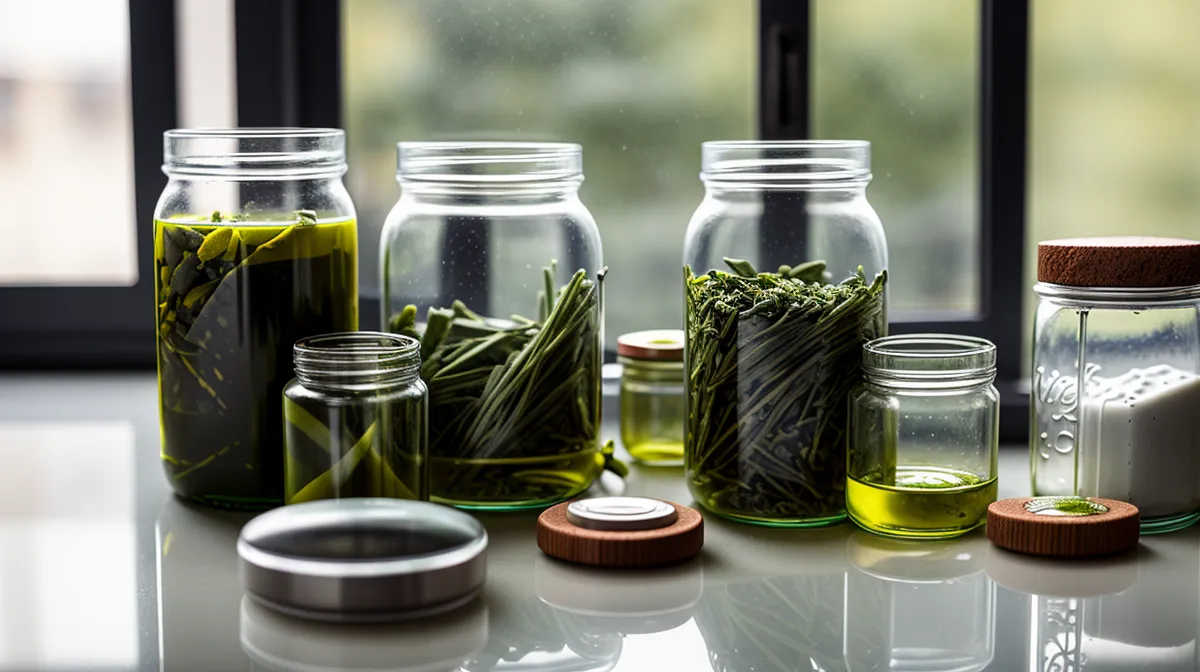
Twelve hundred milligrams. That's the entire ingredient disclosure on the back of a bottle labeled Metabolic Igniter — one number covering a whole proprietary blend, with zero breakdown of what's actually inside it. Next to that bottle on my counter sits a plain jar of Berberine HCL, and comparing those two labels turned into the most useful supplement-transparency exercise I've run in a while. This is really a story about natural weight loss, sure, but it's just as much a story about what happens when a company is legally allowed to hide its recipe.
Grocery store spice blends work the same dishonest way if you think about it — a jar labeled Italian Seasoning doesn't have to tell you how much of it is salt and dried parsley stems versus actual basil. Supplement companies figured out the same trick decades ago, and I've been the guy standing in the aisle squinting at fine print ever since, which is not exactly a flattering personality trait to bring to a dinner party. My testing notebook sat open next to a mug of green tea that went cold before I'd written three lines, which tells you roughly how deep this particular rabbit hole got.
Two Bottles, Two Philosophies
Metabolic Igniter promised a metabolic breakthrough on the front label and delivered jitteriness, a racing heart on my afternoon walk, and no real movement on the scale after weeks of taking it. That's the pattern with a lot of all-in-one blends built around a caffeine-heavy stimulant base — you feel something happening, but you can't tell if it's the ingredient doing its job or just your nervous system getting hammered. Before that bottle, I'd already burned two months on apple cider vinegar shots every single morning, choking them down before coffee because a forum thread swore by them, and I never noticed one measurable difference in hunger, energy, or the scale.
Some of my impatience with that kind of vagueness goes back to two years spent traveling around Southeast Asia, where herbalists would weigh out a raw ingredient in front of you instead of hiding it behind a brand name — a habit that rewired how I read every label since. That's the same instinct that makes me flip a bottle over before I flip open my wallet, and it's exactly what a 1,200mg proprietary blend line is designed to make impossible.
The Proprietary Blend Didn't Do What the Label Promised
A proprietary blend isn't automatically worthless, but it is automatically a black box — I've made the full regulatory case elsewhere, so I'll spare you the rant here. What matters for this comparison is simpler: with Metabolic Igniter, I had no way of knowing if I was getting a meaningful dose of anything, or mostly filler with a trace of something active stirred in for the label.
Pure Berberine HCL solved that specific problem — not because it's some miracle compound, but because a single-ingredient jar has nowhere to hide. I've made this exact switch before, from a berberine-containing blend to the standalone compound, and what changed wasn't a dramatic transformation — it was that the dose finally became something I could measure and correlate against how I actually felt, which I wrote about in more detail in Beyond the Blend: Why I Stopped Buying Mystery Capsules and Went Back to Single-Ingredient Basics.
Pure Berberine Meant I Could Actually Track What Was Happening
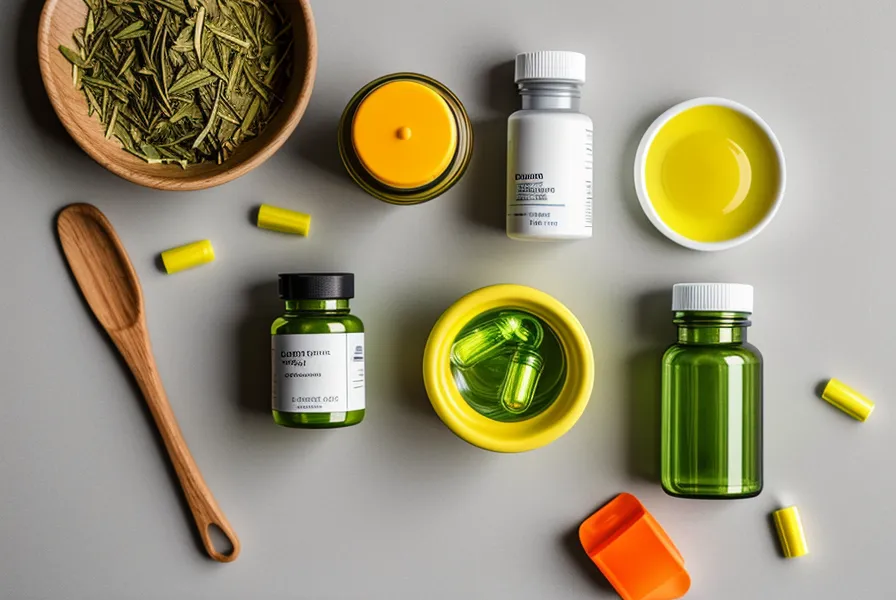
The jar itself lists a 97% purity standard and a standard 500mg capsule size, and that specificity is the whole point — every note I logged afterward actually meant something instead of being a guess. You can find the same alkaloid family growing locally in Oregon Grape, for what it's worth, though I'm not about to start foraging my supplement stack from a hedge.
A friend of mine — the kind who spends her Tuesday nights in improv classes at Brody Theater and has approximately zero patience for me talking about supplements — texted back one word after I sent her an unplanned gym mirror photo: whoa. That landed harder than any lab report would have, mostly because she wasn't trying to convince me of anything. Most of my actual field-testing happens on ordinary walks through the Alberta Arts District, past the storefronts along NE Alberta Street, not in some controlled setting, which is exactly why I trust what I can feel and track over what a marketing team claims.
None of this felt like the jittery stimulant hit I'd gotten used to from blend products. There was no racing pulse, no afternoon crash, just a steadier hunger pattern across the day. I won't pretend to explain the exact biological mechanism here; what I can tell you is that it works on blood sugar and hunger signals rather than revving up your nervous system, and that distinction mattered more to how I felt than anything printed on either label.
Does the Cost-Per-Serving Math Actually Favor Single Ingredients?
I'm not going to build a full cost-per-serving breakdown inside this post — there's no pricing information here worth working from, and that math deserves its own dedicated comparison rather than a rushed paragraph. Gut-health angles like microbiome balance play into weight loss too, but that's a different rabbit hole than the one this article is digging. If you want that same know-exactly-what's-active standard applied somewhere else, I ran probiotics through it in Why LeanBiome Is the Best Shelf Stable Probiotic for Weight Loss, where shelf-stability claims turned out to matter as much as what's on the label.
So Which Bottle Should You Actually Buy?
Choose the blend when you genuinely don't care about dosage precision and just want a general-purpose product with a recognizable name behind it — plenty of people do fine with that, even without full transparency. Choose the single-ingredient route when you want to run your own experiment, correlate one specific compound against specific effects, and adjust based on what you're actually observing instead of what a marketing team decided to combine. For me, once the number on the label started matching the results I was tracking, there wasn't much of a case left for going back.
None of this is medical advice, and Berberine is potent enough that it's worth a conversation with an actual doctor before you experiment with dosage — I say that as a label-obsessive, not a clinician. If you want the deeper dive into which single-source brands actually pass my particular brand of label-snob scrutiny, that's covered separately in The Transparency Trap: Why I Traded My Multi-Ingredient Fat Burners for Single-Source Berberine. A label willing to show the whole number will always earn more trust from me than one that only shows the total.
All opinions and observations on this site are my own and are shared purely for informational purposes. They do not constitute professional medical, financial, or legal advice. Please consult the relevant professional before acting on any information presented here.