Four. That's how many separate botanicals get folded into the single blend number sitting behind CitrusBurn's star ingredient, while the front label gives bitter orange, the whole reason anyone buys this weight-loss supplement in the first place, exactly one word of real estate. If you picked this bottle up because "synephrine" sounded like the serious, grown-up version of whatever used to be in your gym bag a decade ago, you're exactly who this supplement-label teardown is for. Short answer: CitrusBurn's bitter orange is real, it's legal, and it's still hiding more than it's showing you.
Here's the myth going around every forum thread about this stuff: because bitter orange replaced ephedra after the ban, people assume it's basically ephedra's milder cousin, same rules, same clock, same results, just repackaged to stay legal. That's backward. Bitter orange didn't inherit ephedra's playbook so much as get drafted as a replacement that works through completely different machinery, and the actual risk with a product like CitrusBurn has nothing to do with it being secretly dangerous and everything to do with you not knowing how much of it you're swallowing.
Is Bitter Orange Just Ephedra With a New Name?
Rewind to 2004, when the FDA pulled ephedra off supplement shelves after years of heart attack and stroke reports tied to stimulant stacks. The industry needed a legal replacement fast, and Citrus aurantium — bitter orange, sometimes called Seville orange — got the call. Its peel carries a compound called p-synephrine, which works on your body differently than ephedra did and is generally considered gentler on the cardiovascular system. That's not nothing. But "gentler" and "harmless" aren't the same word, and anyone on blood pressure medication or with an existing heart condition should be running this past an actual doctor before running it past me.
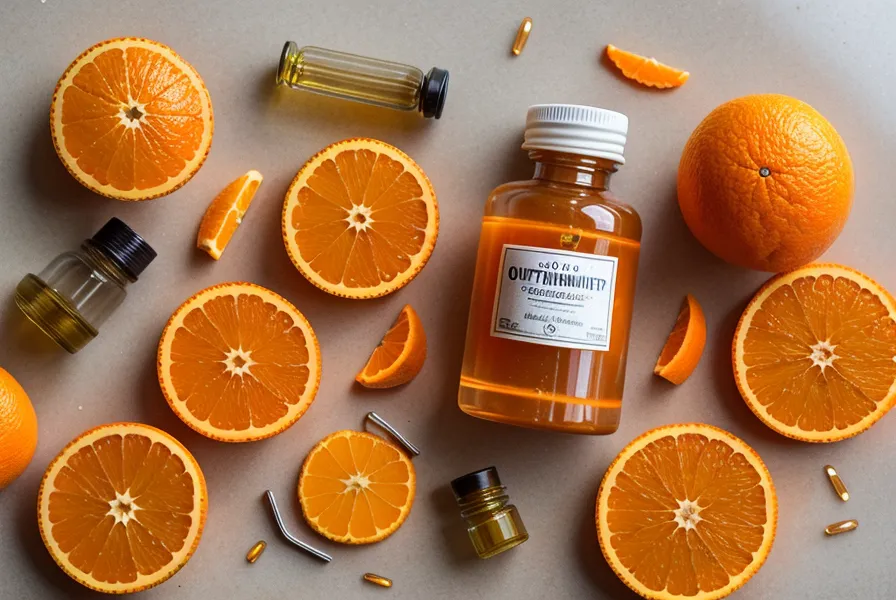
My friend Derek Pham, a running-group friend of mine who got serious about ingredient lists after his doctor flagged some pre-diabetes markers at a routine checkup, does this thing where he always buys the cheapest version of a supplement before he'll even consider the premium one. We ran into each other at the Saturday Market under the Burnside Bridge a while back, him holding a jar of marmalade made from actual Seville oranges he'd just bought off a vendor, and he held it up next to a photo of CitrusBurn's label on his phone and asked the obvious question: how much of what's in that jar is actually in the bottle? Nobody selling marmalade needs to hide the fruit. CitrusBurn does.
The Front Label Isn't the Supplement Facts Panel
Second myth, and it's the bigger one: people assume whatever ingredient gets top billing on the front of a bottle is the ingredient getting a meaningful, disclosed dose on the back. Flip CitrusBurn over and bitter orange isn't listed with its own milligram number at all — it's folded into a proprietary metabolic blend alongside several other botanicals, all sharing one combined weight. I've already gone off at length about why that specific trick drives me up the wall over in my notes on spotting real metabolic ingredients on labels, so I won't repeat the whole rant here. Short version: when a brand hides the breakdown, assume the expensive ingredient is the smallest line item, not the biggest.
I learned that lesson the expensive way years before CitrusBurn ever showed up on my radar, back when I signed up for one of those monthly appetite-suppressant subscription boxes that mailed out a new proprietary blend every few weeks no matter how the last one performed. It canceled itself out of my life the day I finally admitted I couldn't tell you what was actually in any of those capsules, only that the box kept arriving. CitrusBurn isn't that bad. But it's playing from the same rulebook.
The Timing Myth Nobody Warns You About
Third myth: people figure a fat-burning capsule works the same no matter when or how you take it, so they knock it back with tap water first thing in the morning and move on with their day. Bitter orange's active compounds don't cooperate with that routine — they do noticeably better with a little dietary fat around to help them along, which is its own biochemistry rabbit hole I'll leave for another article. The practical version matters more anyway: if you're testing CitrusBurn on an empty stomach and judging it a dud, you're not testing the ingredient. You're testing the worst possible way to take it.
A reader named Edgar Vasquez emailed me after his cardiologist flagged his triglycerides at a routine checkup, asking whether CitrusBurn was worth adding to his morning routine — not as a replacement for whatever his doctor had already recommended, just a second opinion on the label. I told him what I just told you: pair it with breakfast, something with actual fat in it, not black coffee and good intentions. He checked back later, unprompted, to say the breakfast version gave him a steady warmth he could actually feel. That's the same thing I noticed one morning when two flights of stairs at Powell's stopped leaving me winded. Pure anecdote, not a clinical trial, but it tracks.
Reading CitrusBurn's Panel Like You Mean It
So here's what actually matters when you're standing in an aisle holding this bottle, or any bitter-orange product like it. Check whether bitter orange gets its own milligram number or whether it's buried inside a blend — CitrusBurn buries it. Check whether the capsule is a dry cellulose shell or something built to travel with fat, because if it's the former, pairing it with real food is on you. And resist the urge to run cost-per-serving math before you've confirmed what you're actually paying for — I've written about that math elsewhere, and it only means something once the dose on the label is honest.
None of this makes CitrusBurn a scam. Citrus aurantium is a legitimate, well-studied botanical, and brands that lean on it instead of a caffeine sledgehammer deserve some credit for the choice. My own self-deprecating confession: I bought this particular bottle fully intending to write a glowing review, because the marketing copy on the box got me the same way it probably got you, and then the actual panel talked me out of it in about ninety seconds flat.
If you want to watch this exact same shell game play out in a totally different aisle, I ran into nearly identical label tricks researching conjugated linoleic acid supplements without proprietary fillers — same industry habit, different fruit, same missing numbers.
The Verdict on CitrusBurn's Bitter Orange
The myth to drop is simple: a legal, gentler-on-your-heart botanical replacing a banned stimulant does not automatically mean a transparent, well-dosed product, and a hero ingredient featured on the front of a bottle does not mean that ingredient is doing the heavy lifting inside it. Buy CitrusBurn if you want, but buy it with your eyes open — take it with a meal that has some fat in it, don't expect anything from it on an empty stomach, and don't assume the words "bitter orange" on the front tell you anything the blend on the back is working hard to obscure. That's the whole rule. Everything else is marketing.
All opinions and observations on this site are my own and are shared purely for informational purposes. They do not constitute professional medical, financial, or legal advice. Please consult the relevant professional before acting on any information presented here.