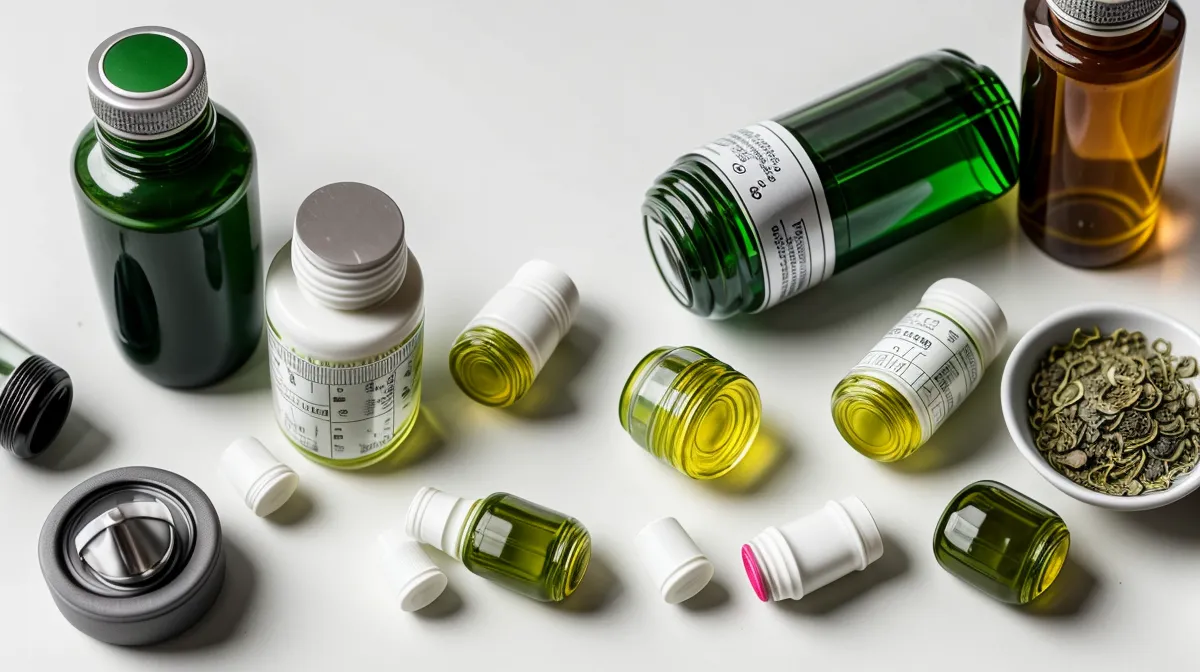
My hand is shaking too hard to screw the cap back onto a bottle of green tea extract, twenty minutes after I took the dose the label recommended. Nobody puts that on the front of the bottle. Green tea extract has a reputation as the gentle, "natural" pick in the weight loss supplement aisle, and for plenty of people it is. For plenty of others, it comes with real, physical side effects that show up days before any change on the scale, and that gap between the marketing and what actually happens in your body is what I want to walk through here, question by question, the way people actually ask me about it.
Quick disclosure before we go further: a few of the links in this piece are affiliate links, and if you buy through one I earn a small commission at no extra cost to you. I only link to things I've actually used myself, never something I only read about on a sales page. None of that changes what I'm about to tell you about how green tea extract can make you feel.
Green Tea Extract Safety for Daily Use
For most healthy adults, yes, at a sensible dose. Where people get into trouble is treating a capsule the same way they'd treat a cup of tea. Most capsules concentrate the plant's Epigallocatechin gallate (EGCG) into a single dose that's nowhere near what you'd get from steeping a bag of tea. Concentrating a plant compound down into a pill is a bit like reducing a stockpot into a few tablespoons of glace de viande: you're not drinking a milder version of the original, you're getting something far more intense than anything that occurs in nature, and your body reacts accordingly. It's marketed as a thermogenic, something meant to nudge your resting energy use up a notch, and that mechanism alone is worth its own full breakdown rather than a paragraph buried in an article about side effects.
A friend of mine who brews kombucha in a crock on their kitchen counter caught me comparing three loose-leaf blends against a capsule in the tea aisle at People's Food Co-op on SE 21st Avenue. Their take was that anything concentrated enough to need a capsule probably isn't something your body evolved to process in one hit, and I don't think they're wrong.

The Jitters Nobody Warns You About
Shaking hands and a racing pulse are the two complaints I hear most, and they're almost always tied to caffeine content nobody bothered to disclose. I refuse to buy another weight loss supplement with a proprietary blend, and a green tea capsule that hides its actual caffeine dose behind a name like "Metabolism Complex" is exactly the pattern that gets people. You genuinely can't tell if you're taking a mild dose or something closer to a double espresso downed standing at the counter, and your nervous system finds out before your brain does.
This isn't the first supplement that let me down in a quieter way. Three months on a bottle of Costco's garcinia cambogia capsules taught me that "nothing happened" is its own kind of side effect — no appetite change, no shift on the scale, just a habit I kept up out of stubbornness. Green tea extract is the opposite problem: something very clearly happens, and it isn't always something you want.
The Nausea and Chalky Aftertaste
Nausea is the complaint I hear about most after the jitters. In my experience it's worst on an empty stomach, and eating something small first heads it off more often than not — I'm not going to pretend I know the exact biology behind that, just that it's held up every time I've tested it. Bloating is a separate complaint people bring up too, and feeling puffy for a few days isn't the same thing as not losing fat, which is a mix-up worth untangling on its own sometime.
Then there's the texture. Cheap capsules leave a chalky residue on your fingertips if you ever break one open to see what's inside, and a bitter, metallic aftertaste that a full glass of water won't rinse away. That's usually a sign the Polyphenol extraction was rushed, and it's the fastest tell I've found for a poorly made product before you even get to the side effects.
Reading the Label for Transparency, Not Just Hype
Label-reading is close to a hobby for me at this point, which either makes me very dedicated or means I need a new hobby — I'll let you decide. What I actually check first is whether the label states an exact milligram amount for both the extract and the caffeine, not just a blend name. Single-ingredient sourcing matters too, though how to actually vet where an ingredient comes from is a whole separate conversation. I've been happier with CitrusBurn since it discloses those numbers outright instead of hiding behind a "proprietary" label, and I won't get into the full cost-per-serving math here since that comparison deserves its own article.
Cost aside, transparency is the whole ballgame. These days I care more about transparent metabolic support than I do about whoever's bottle claims the biggest number on the front.
Whether It Works Has Nothing to Do With the Shaking
Side effects and results are two separate questions, and people mix them up constantly. I've had stretches where my belt cinches a full notch tighter than usual without me doing anything differently, which is the only kind of progress that's ever felt honest to me — but that's not a green light to chase the feeling by taking more, and jitters aren't proof that something is "working" any harder. If you want lower-stimulant options, plenty of appetite suppressants work through fullness rather than through your adrenaline, and that's worth knowing if the shaking is the part you can't tolerate.
When a Side Effect Means Stop, Not Push Through
Here's the criterion I actually use: if the shaking hasn't settled within an hour, if your heart is doing something you'd describe as "off" rather than just "faster," or if nausea is bad enough to knock out more than one meal, that's your body asking you to stop, not a phase to push through until you "adjust." A racing pulse that resolves on its own after thirty minutes is a different situation than one that doesn't. I'm not a doctor, and none of this is a substitute for talking to one — it's just the line I personally use before I decide a supplement isn't worth what it's costing me.
Trying a Completely Different Approach
Green tea extract isn't the only thing people ask me about. Some readers do better focusing on their gut and how a product affects their microbiome over the following weeks rather than chasing a stimulant. Others get curious about the traditional remedies I picked up while traveling, the kind that never touch a capsule at all. A glucomannan fiber supplement built around satiety is worth a look if stimulants are the actual problem, and a citrus bioflavonoid blend is another gentler direction if your nervous system is the sensitive part. A few people ask about a smoothie-diet approach instead of pills entirely, or how long a fair trial period should run before you write a supplement off completely. Every one of those is its own answer, not a rushed paragraph tacked onto this one.
For gut-focused support specifically, I've also looked at LeanBiome, though whether its strains stay viable sitting on a shelf for months is a fair question and a different one than anything covered here.
All opinions and observations on this site are my own and are shared purely for informational purposes. They do not constitute professional medical, financial, or legal advice. Please consult the relevant professional before acting on any information presented here.