
How do you actually know what's inside a weight loss supplement: the real milligrams, not just the marketing on the front of the bottle? That question is basically why I got obsessed with label-reading and supplement transparency in the first place. If you've ever stood in the natural weight loss aisle trying to compare two bottles and gave up, you already know the feeling I'm talking about.
Quick disclosure up front: a few of the links below are affiliate links, and I earn a small commission if you buy through them, at no extra cost to you. I only link to things I've actually tested myself. I'm not a doctor or a scientist — just someone who reads a lot of fine print and got tired of guessing.
What a Proprietary Blend Label Won't Tell You
A proprietary blend means the company lists its ingredients in order but gives you one combined weight for the whole mix. That's legal, common, and mostly useless if you're trying to figure out whether you're getting a real dose of anything. Picture a recipe card that says "flour, sugar, butter, vanilla" with one total weight for all four. You'd have no idea if it's mostly flour or mostly vanilla, and the company has zero obligation to tell you.
Here's the rule I use now: if a product hides its actual dosages behind a blend name, I skip it, full stop. I'd rather pay for a single ingredient at a stated amount than gamble on a "Matrix" or "Complex" that could be mostly filler. I've gone deep on that shift before in My Portland Kitchen Audit: Why I Trashed My 'Proprietary' Fat Burners for Transparent Citrus, if you want the blow-by-blow.
The Garcinia Capsules That Taught Me Nothing
Three months of garcinia cambogia capsules from Costco taught me that lesson the hard way. No change in appetite. No change on the scale. Nothing I could point to and say "that did something." The label wasn't even hiding a blend; garcinia was the whole ingredient, plain and dosed. It just didn't do much for me. There's a faint chemical smell that hits when you crack open a fresh bottle of capsules for the first time, not awful, just a little off, and three months later, that smell is honestly the clearest thing I remember. Not every disappointment is a transparency problem. Sometimes the ingredient itself doesn't do much for your body specifically, and no amount of label-reading fixes that.
Does Timing Matter as Much as the Ingredients?
Dosage isn't the only blind spot. Timing matters too. A stimulant-heavy blend taken right before bed interacts with your circadian rhythm in a way a daytime dose doesn't, and most labels never say a word about when to actually take the thing.
A friend of mine brews kombucha in a crock on their kitchen counter, and it runs on the same transparency principle. They know exactly what's fermenting in there because they put it there themselves, no "Proprietary Culture Blend" required. I picked up a similar instinct watching how markets abroad sell ingredients one at a time instead of pre-mixed, where you buy exactly what you need and know exactly what you bought.
Reading a Label Before It Reaches the Cart
Before anything goes into my cart at People's Food Co-op on SE 21st Avenue, I run through the same short checklist. First, I flip the bottle over and scan for the words "proprietary," "blend," "matrix," or "complex" anywhere on the ingredient panel. Any one of those is a yellow flag, not automatically a dealbreaker, but a reason to look closer. Second, I check whether the ingredient the marketing is actually built around has its own milligram number, separate from any blend. Third, I glance at where that ingredient sits on the list. Earlier usually means more of it, and if the one doing the heavy lifting shows up near the bottom, that tells me something. I also do a rough cost-per-serving check before buying anything, though the full math on that is really its own topic.
I broke down more of these red flags in my guide to decoding the proprietary blend scam, including a couple of label tricks that took me way too long to notice.
Where Transparent Formulas Actually Hold Up
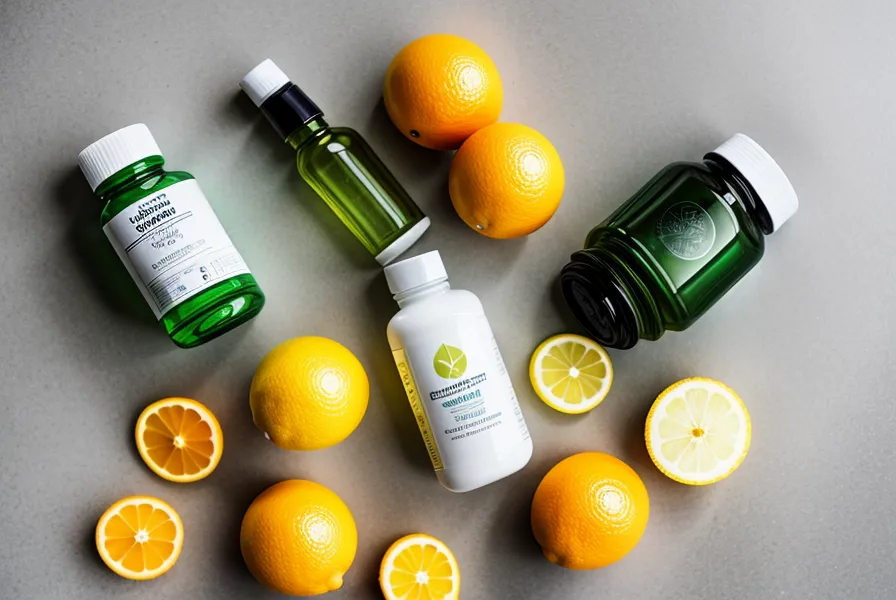
CitrusBurn is the one product on my shelf right now that passes every item on that checklist. It states the exact milligrams of its citrus polyphenols instead of burying them inside an "Energy Matrix," which is the entire reason I started paying attention to it. Citrus bioflavonoids get a lot of hype in this space, and I'd rather see the number than take someone's word for it. Taking it hasn't been dramatic: no jitters, no crash. The clearest sign came on a walk through a packed weekend market crowd downtown, where I'd gone twice as far as I meant to before my legs even said anything about it. I still can't point to one exact number that did that, and that's fine, because at least I know precisely what's producing the effect instead of guessing at a blend.
On the whole-food side, the Smoothie Diet works on the same principle without any capsules at all. It's spinach, fruit, and whatever else you put in the blender, so there's no blend name to decode because you made the blend yourself. It won't replace a properly dosed ingredient if you're trying to solve something specific, but as a reset from processed "diet" food, the transparency alone makes it worth trying.
I also spent time looking at gut health and the microbiome side of weight loss, which led me to LeanBiome. The pitch there is specific bacterial strains instead of a vague "Gut Health Blend" that hides the actual counts. I have zero medical training, so talk to your own doctor before starting anything new, but the transparency in LeanBiome is what let me actually track which strains seemed to help my digestion and which ones did close to nothing.
The Bottom Line on Mystery Blends
None of this makes me anti-supplement. It makes me anti-guessing. A blend isn't automatically a scam, but a company that won't show its math is asking for trust it hasn't earned. Choosing between something like CitrusBurn and a whole-food reset like the Smoothie Diet isn't really about the marketing on the front of the box. It comes down to whether I can see what I'm paying for on the back of it.
Reading ingredient panels at other people's dinner parties is basically who I am now, which is exactly as charming as it sounds. But my energy levels stopped being a mystery once I stopped buying mysteries, and that trade-off was worth the eye-rolls.
All opinions and observations on this site are my own and are shared purely for informational purposes. They do not constitute professional medical, financial, or legal advice. Please consult the relevant professional before acting on any information presented here.