
A grapefruit at the Portland Saturday Market under the Burnside Bridge costs the same whether the vendor says it's from Hood River or just points and says 'local.' A weight loss supplement with 'proprietary blend' stamped across the ingredient panel costs more for telling you less about what's actually inside. That's the whole issue with this category for me — ingredient transparency should be the baseline, not a selling point, and I stopped trusting any bottle that hides its metabolic health claims behind a blend name instead of listing actual milligrams.
Quick housekeeping before we get into it: some of the links below are affiliate links, and if you buy through them I earn a commission at no extra cost to you. I've tested every product mentioned here myself, mostly because I apparently enjoy spending my own money to find out what doesn't work — a hobby with a terrible return on investment. I'm not a doctor, just a guy who reads too many ingredient panels, so check with your own doctor before you change anything about your routine.
Some of this habit started years ago in the herbal stalls of Chiang Mai, where every root and dried leaf sat in an open bin with its use written on a small card — no blend, no mystery, just the thing itself. Call it label-reading if you want a name for it; I just call it not getting ripped off. What I picked up traveling through Southeast Asia is its own long story I've told elsewhere, so I'll skip the travelogue here and get to the part that matters for a supplement shelf: if a seller won't tell you exactly what's in the mix, assume it's mostly filler.
Reading the Fine Print on CitrusBurn and Cardio Slim Tea
CitrusBurn earned a permanent spot on my shelf for a simple reason — it lists a standardized citrus extract percentage instead of just 'citrus blend.' Before that, I was working through a subscription appetite-suppressant box that showed up every month, stuffed with proprietary blends I couldn't decode, and it did roughly nothing except lighten my wallet on a schedule. Switching felt less like an upgrade and more like admitting the mystery box was never going to work.
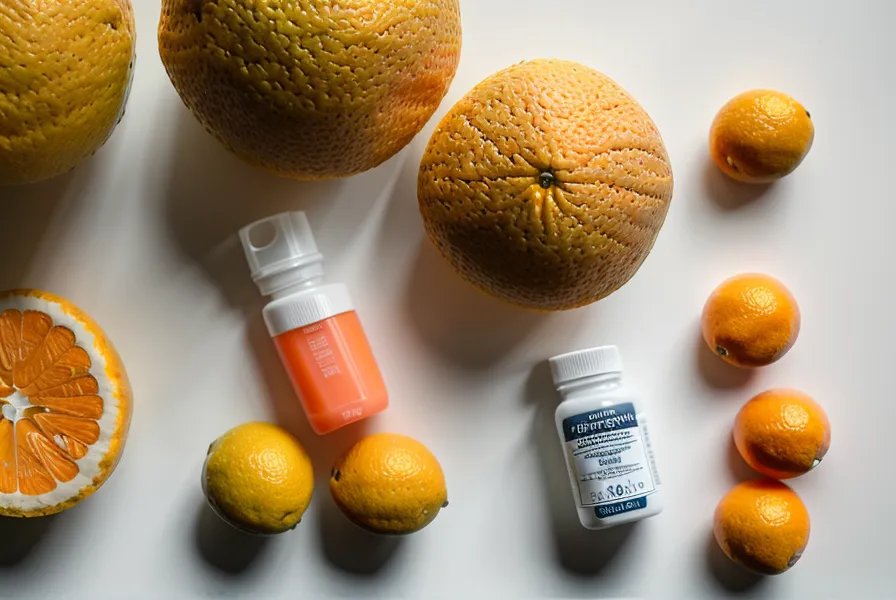
Twenty minutes or so after taking it, there's a low, steady warmth in my core instead of the jittery buzz I used to get from cheap high-caffeine 'fat burners' in my twenties. Picture the difference between a good bone broth and a gas station energy drink — one holds you up for hours, the other just rattles your teeth for an hour and leaves you crashing. Nobody needs a redacted ingredient list to get that kind of result.
Cardio Slim Tea sits in the same camp — actual measurements on the label, no hidden stimulant doing the heavy lifting, which is its own rabbit hole I won't fully go down here. Learning to use it properly took some trial and error, though: I leaned on tea and light snacks instead of real food for a few days, got light-headed and short-tempered, and realized fast that even a well-labeled supplement isn't a meal replacement. That one's on me, not the product. For the deeper walkthrough on how citrus-based extracts get standardized in the first place, there's a full guide on transparent citrus extracts I wrote separately.
Why LeanBiome's Probiotic Count Changed How I Shop
LeanBiome earned its spot for one reason: it states its probiotic count as 10 billion CFU right on the front of the bottle, not buried inside a blend. Most 'proprietary' probiotics won't tell you the CFU of individual strains, and that's a bigger red flag than people give it credit for. A bag of coins is worthless if you don't know whether they're quarters or pennies. Whether that number survives the trip from factory to my kitchen counter is a separate question I've covered in more depth elsewhere. Here, I just care that the number exists at all, and that Lactobacillus gasseri is named outright instead of hidden inside a 'gut health complex.' The heavy, bloated feeling I used to carry lifted once I stuck with it consistently. I won't pretend to understand the microbiome well enough to explain the mechanism — only that naming the strain let me actually track what was working. The full label breakdown lives in a LeanBiome buying guide for label snobs I put together separately.
My friend Derek Pham does something smarter than I do: before he'll spend real money on a supplement, he buys the cheapest version on the shelf first, just to see how far off it actually is from the premium bottle. It's not a bad instinct. A lot of budget probiotics pull from the same handful of strains and the same few suppliers, just repackaged under a different label — single-ingredient sourcing is its own topic I get into elsewhere, but the short version is that cheap-and-transparent usually beats expensive-and-vague. I don't run the full cost-per-serving math in this piece either, since that comparison lives in a different one, but the shorthand holds up every time I've checked it myself.
The 21-Day Program: More Than a Diet With Better Marketing
The Smoothie Diet is the outlier in my rotation because it's a full 21-day program built around whole foods instead of a bottle. Mapping out the day-by-day protocol belongs in a different piece I've already written, so here I'll stick to the label habit I carried into it: the plan leans on green tea extract, and the batch I used stated a standardized 50% EGCG content right on the label. A green tea supplement that won't tell you the EGCG percentage is just charging you for flavored hot water. Running the program felt less like a diet and more like a cooking class — the kind where you finally learn the ratio that keeps a sauce from breaking, except here it was protein and fiber keeping me from getting hangry by mid-afternoon.
Edgar Vasquez's Results After Switching to Transparent Labels
A reader named Edgar Vasquez emailed after his cardiologist flagged high triglycerides at a routine checkup — he'd been buying whatever fat burner had the loudest front label at the drugstore without reading past the marketing copy. We went through what he already owned, ingredient by ingredient, and he swapped anything hiding behind a blend name for options that listed exact amounts instead. Edgar's the type who checks back in after a while to report exactly what he noticed, which is rarer than you'd think since most people just quietly stop replying. What he told me matched what I'd already found on my own end: nothing dramatic, just steadier energy and less of the crash-and-binge cycle that vague-label stimulant blends tend to cause. None of this replaces an actual conversation with his own doctor, and he knows that better than most people who email me.
Rebuilding My Supplement Stack from Scratch
Starting from zero with just two places to look, CitrusBurn is where I'd point you first for a transparent, non-jittery energy option, since the citrus profile is spelled out instead of hidden behind a blend name. If gut health is the actual issue — and for a lot of guys my age chasing a flatter stomach, it usually is — LeanBiome earns the spot for stating its CFU count outright instead of guessing. Neither one needs a proprietary blend to justify its price, which at this point is basically my only real filter left. Read the panel, trust the milligram counts, and eat an actual meal once in a while — the label can only tell you so much, and the rest is on you.
All opinions and observations on this site are my own and are shared purely for informational purposes. They do not constitute professional medical, financial, or legal advice. Please consult the relevant professional before acting on any information presented here.